Gulf Jobs Outlook: Where the Opportunities Are for Indian Workers.
For generations, the Gulf has been where Kerala goes to work. The Kerala Migration Survey 2023 counted about 2.2 million emigrants from the state, sending home roughly ₹2.17 lakh crore in remittances that year.
But the Gulf job market of 2026 is not the one our fathers and uncles knew. Some doors are opening wider, others are closing, and the rules for getting in are changing. Here is what Indian jobseekers need to know right now.

Where the demand is
Saudi Arabia and the UAE remain the two biggest employers of Indian workers. Between 2015 and 2019, they received about 750,000 and 670,000 emigration-cleared Indian workers respectively (Middle East Institute).
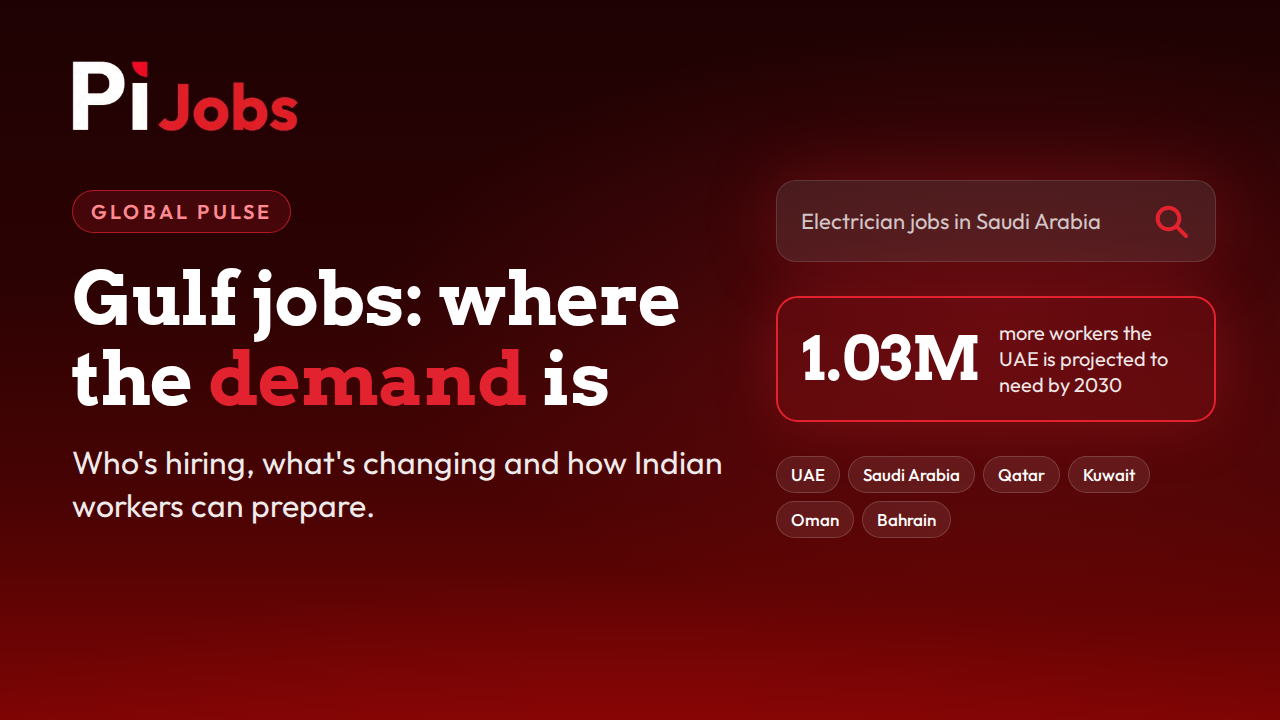
The UAE alone is projected to need about 1.03 million more workers by 2030, according to a ServiceNow and Pearson workforce forecast reported by Gulf News. Manufacturing, education, retail, healthcare and finance lead the list, and construction, technology and energy are expected to drive hiring in 2026.

For Indian jobseekers, the opportunities cluster in five areas:
Sector | Roles in demand |
|---|---|
Construction and infrastructure | Heavy equipment operators, electricians, welders, plumbers, HVAC technicians, site supervisors |
Healthcare | Nurses, lab and radiology technicians, pharmacists, caregivers |
Logistics and transport | Heavy and light vehicle drivers, warehouse staff, forklift operators |
Hospitality and retail | Chefs, hotel staff, sales associates, store supervisors |
Energy, manufacturing and tech | Mechanical and instrument technicians, machine operators, IT and AI specialists |

What's changing
1. Skills now have to be proven, not just claimed. Saudi Arabia's Skill Verification Program (SVP) requires Indian workers in 19 trades across electrical, welding, plumbing and air conditioning to pass written and practical tests. Passing earns a professional verification certificate that is needed for certain work visas and renewals (Vialto Partners).
2. More jobs are reserved for citizens. Programmes such as Saudisation (Nitaqat) tie a company's visa quota to how many local nationals it employs (Middle East Institute). Expect fewer openings in roles that locals can fill, and more in specialised, technical trades.
3. Certified and specialised workers earn more. The demand is shifting from general labour toward licensed technicians, operators, nurses and tech talent. A recognised licence or certificate can be the difference between a basic helper role and a skilled one.
4. Recruitment is moving online, and so are the scams. Genuine employers and agents now advertise digitally, but so do fake ones. Verification matters more than ever.
How to prepare
- Pick a skill, then certify it. Get a recognised licence or trade certificate before you apply. For Saudi trades covered by SVP, plan for the skill test.
- Get your documents ready early. A passport valid for at least 2 years, attested educational and experience certificates, and your licence copies.
- Build Gulf-ready experience. Two or more years of documented experience in India makes your application far stronger.
- Learn the basics of the job's language. Simple English, and a few Arabic workplace words, help at interviews and on site.
- Use only registered recruiting agents. Check them on eMigrate and never pay more than the legal service charge.

Safe-migration checklist
- My agent is listed as active on eMigrate
- I have a work or employment visa, not a visit visa
- My contract states salary, hours, accommodation and travel costs
- My skill certificate (SVP or trade test) is done where required
- My family has copies of my passport, visa and contract
Find verified Gulf opportunities on Pi Jobs
Pi Jobs brings jobseekers, employers, recruiting agents and institutes together in one marketplace. Add your skills, licences and Gulf experience to your profile so the right overseas and local opportunities can find you, and always verify before you pay or travel.
Create your profile at pijobs.in.