Europe Is Hiring: Skilled-Worker Routes for Indians
For years, "working abroad" meant the Gulf. Today, a new door is opening. Europe's population is ageing, and countries like Germany are short of nurses, technicians, drivers and IT professionals. Many are now looking to India to fill the gap.
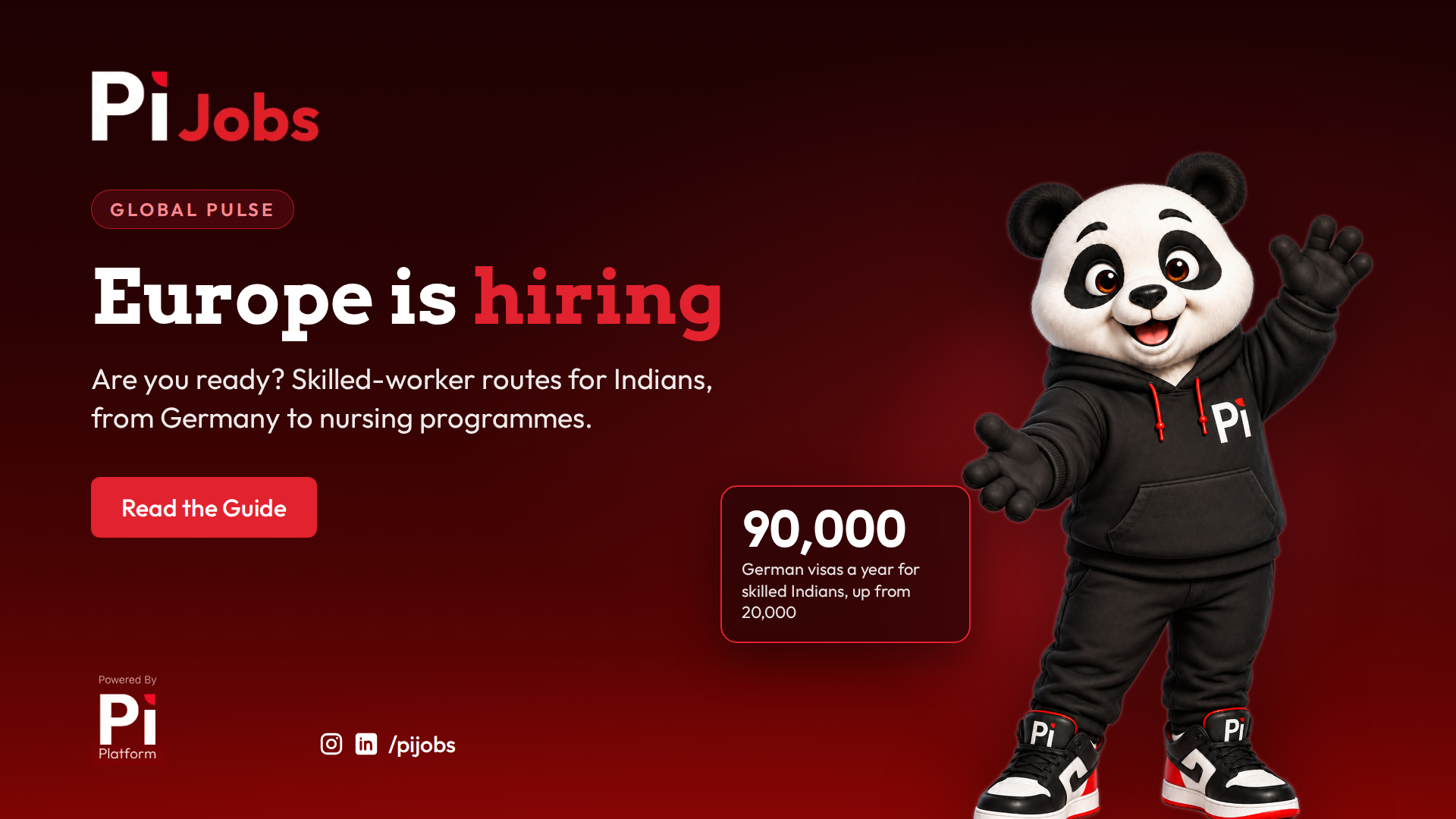
In October 2024, Prime Minister Narendra Modi announced that Germany had raised its annual visa quota for skilled Indian professionals from 20,000 to 90,000 (All India Radio). Here is what that means for you, and how to get started the right way.
The main routes into Europe
1. Germany's Opportunity Card (Chancenkarte) A one-year permit to look for work in Germany, without a job offer. You need a recognised degree or at least 2 years of vocational training, basic German (A1) or good English (B2), proof that you can support yourself, and at least 6 points based on language, experience, age and links to Germany. While searching, you can work part-time up to 20 hours a week (Chancenkarte.com).
2. Germany's skilled-worker visa and EU Blue Card For candidates who already have a job offer. Your qualification usually has to be recognised as equal to a German one, so start the recognition process early.
3. Nursing and care programmes Kerala's NORKA Roots runs the Triple Win programme with German partners. It recruits nursing trainees, provides German language training and supports placement, recognition and visas.
4. Government-to-government agreements India has migration and mobility agreements with France (2018) and Germany (2022), and arrangements with Italy, Austria and Denmark that set legal routes for workers in specific sectors (Vivekananda International Foundation).

Roles in demand
Sector | Roles |
|---|---|
Healthcare | Nurses, elderly care workers, medical technicians |
Skilled trades | Electricians, plumbers, HVAC and solar technicians, welders |
Transport and logistics | Truck and bus drivers, warehouse staff |
Engineering and manufacturing | Mechatronics technicians, machine operators, maintenance engineers |
IT | Software developers, data and cloud specialists |

What it takes
Europe is not like the Gulf. The rules are stricter, but the rewards are long-term.
- Language is the key. German at B1 or B2 is often expected for nursing, trades and customer-facing jobs. Start learning before you apply.
- Your qualification must be recognised. Germany compares your certificate with its own. Keep your mark sheets, syllabus and experience letters ready.
- Experience must be documented. Experience letters with dates, role and duties carry weight.
- Preparation takes time. Plan for 6 to 18 months from language learning to visa, depending on your route.

How to start: 5 steps
- Choose your route. Opportunity Card, job offer, or a programme like Triple Win.
- Start German now. Aim for A2 first, then B1. Use recognised exams such as Goethe-Institute or telc.
- Check recognition. Find out whether your degree or trade certificate needs to be recognised for your target job.
- Organise your documents. Passport, certificates, mark sheets, experience letters and a Europe-style CV.
- Apply through official or verified channels. Government programmes, employers directly, or registered agents.

Stay safe
- I applied through an official programme, a direct employer or a registered agent
- Nobody promised me a "guaranteed" European visa
- I checked the rules on the official German government or embassy website
- My language certificate is from a recognized exam body
- I never paid large fees in cash or without a receipt
Plan your Europe move with Pi Jobs
Pi Jobs connects jobseekers with employers, recruiting agents and training institutes, including language and skills partners. Add your qualifications, licenses and language level to your profile so you're ready when the right opportunity in Europe, the Gulf or at home comes along.
Create your profile at pijobs.in.