Your First 90 Days in a New Job: A Simple Plan to Pass Probation
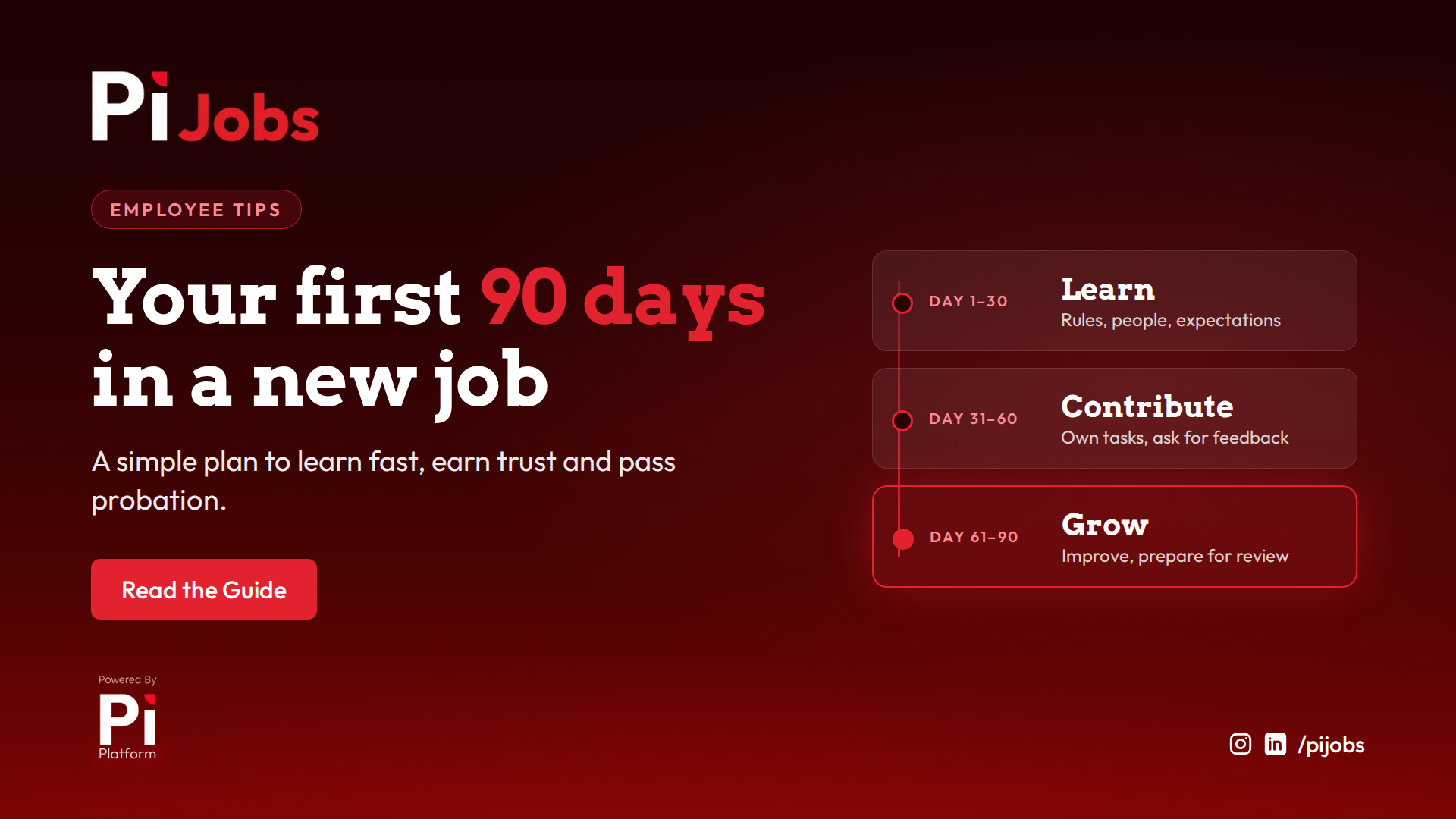
Getting the job is only half the win. The first 90 days decide whether you pass probation, how your manager sees you, and how quickly you are trusted with bigger work.
Most probation periods run three to six months, and first impressions form much faster than that. The good news is that you don't need to be perfect. You need to be reliable, curious and easy to work with. Here is a simple plan to get there.

Days 1–30: Learn
Your only job this month is to understand how things work.
- Be early and be ready. Arrive on time, carry a notebook and finish small tasks the same day.
- Learn names and roles. Know who your manager, supervisor, HR contact and the go-to senior colleague are.
- Ask good questions. Write them down, try first, then ask. "I tried X, is Y the right way?" shows effort.
- Understand the rules. Read your offer letter, probation terms, working hours, leave policy and safety rules.
- Ask your manager one key question: "What does a good first three months look like for this role?"

Days 31–60: Contribute
Now show that you can deliver on your own.
- Own a few tasks fully. Pick work you can complete without reminders and close the loop when done.
- Ask for feedback early. A 10-minute check-in with your manager helps you fix small issues before they become big ones.
- Build two or three work relationships. Help a colleague, share credit and stay out of office gossip.
- Keep a simple work log. Note what you completed, problems you solved and anything you learned.

Days 61–90: Grow
This is when people start trusting you with more.
- Suggest one improvement. A faster checklist, a cleaner report, a safer process. Small and practical wins.
- Take on something new. Volunteer for a task slightly above your current level.
- Prepare for your probation review. Use your work log to show results, and ask clearly what you should focus on next.

5 mistakes to avoid
- Staying silent when you are stuck, and missing a deadline because of it.
- Comparing everything to your old company ("At my last job we…").
- Taking frequent leave or arriving late in the first month.
- Using your phone or social media heavily during work hours.
- Promising more than you can deliver to impress people.

Your probation checklist
- I know exactly what is expected of me in this role
- I have had at least one feedback conversation with my manager
- I keep a log of tasks completed and results
- I follow attendance, leave and safety rules
- I have suggested at least one improvement